
The Real Life of the Throat - Communication & Action Center
The Real Life of the HD Centers - A co-authored Human Design series with 10 voices


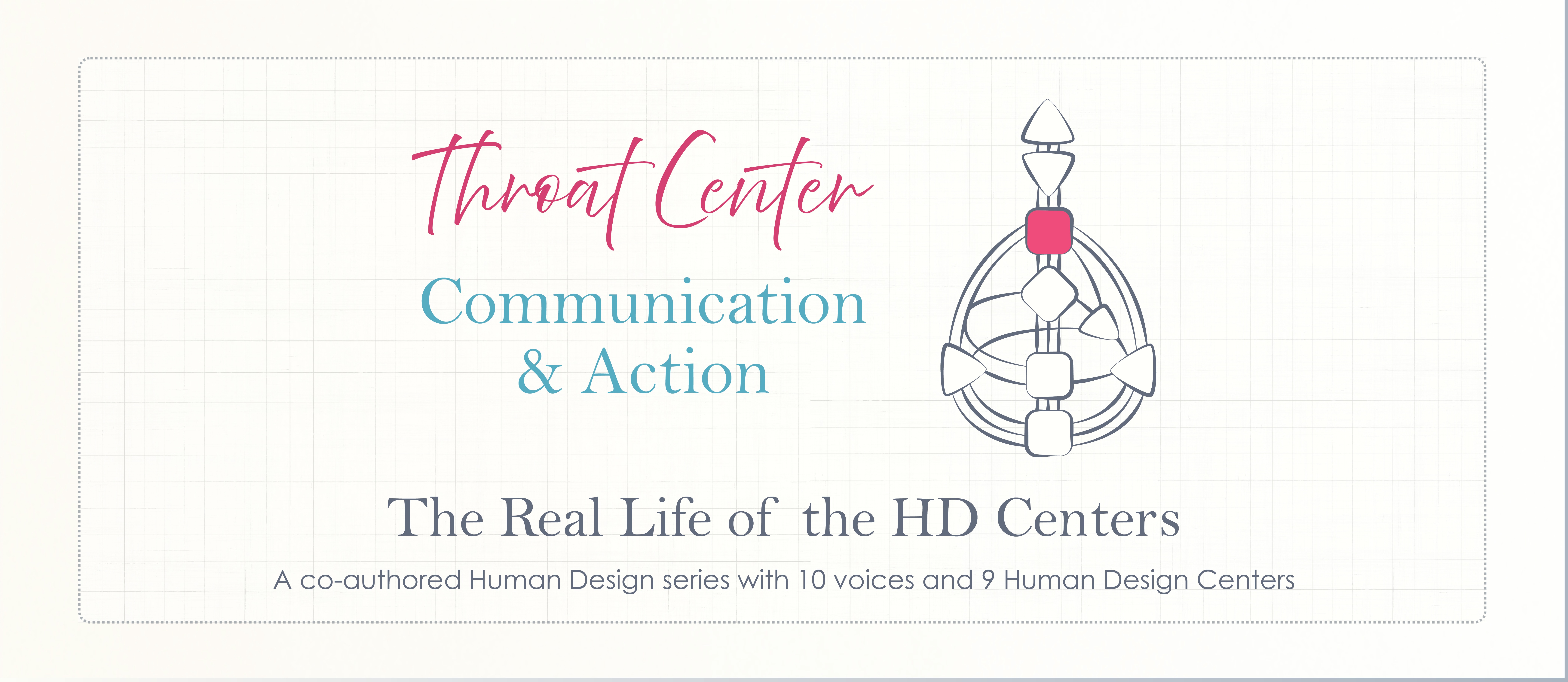
You could say this is the center that manifests because it’s the center that moves our words, our actions, and our nonverbal language into our expression. The Throat is where what lives inside you finds its way into the world to be witnessed, engaged, and materialized.
This center is the destination for our energy. While other centers generate, process, feel, here is where it leaves the body. Some will say it is your voice, but your voice may not originate here. For some, it starts somewhere else entirely, and the Throat Center is simply where it surfaces and becomes visible to others.
About 72% of us have this center Defined, meaning there’s a recognizable way that expression moves through us. The remaining 28% have it undefined or open which means how they communicate and act is shaped by the energy of who’s around them and the space they are in. It’s simply different ways of being in conversation with the world.
How any of us actually live this is shaped by so much more. It’s the people we grew up with. The environments we moved through. With all the other parts of our design working alongside it. It’s why we’ve included Type, Profile, and Definition with each story to give a little extra context for those of you gaga for Human Design.
As you read, notice what stirs in you. It just might be more valuable than the words we wrote.
~Tricia
Throat Center
Communication & Action
How did you start trusting your voice?
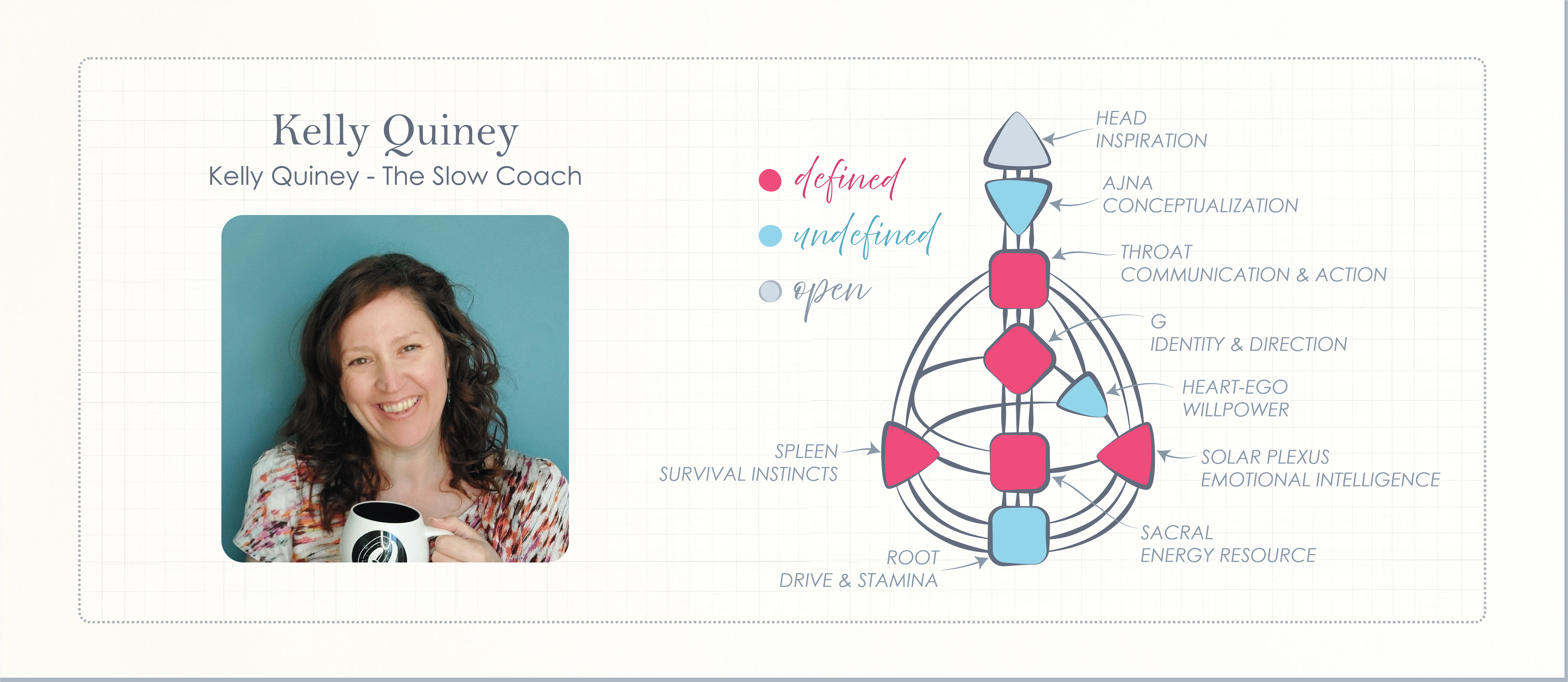
Defined Throat - Communication & Action Center
by Kelly Quiney - 5/1 Manifesting Generator - Simple Split Definition
Substack Publication: Kelly Quiney - The Slow Coach
One of my earliest memories is telling the truth about something I’d seen.
I wasn’t comforted. I was shamed for speaking.
I didn’t know it at the time, but that was the beginning of an underlying belief that would come to define much of my life. My voice wasn’t safe.
As I got older I remember times when I was told off for laughing, for being too loud, along with comments from adults like, “Does she ever stop talking?”
The message wasn’t always spoken aloud, but I absorbed it anyway, be careful what you say.
Don’t be too much. Somewhere along the way, I stopped trusting my own voice.
The funny thing is, at home you couldn’t stop me singing. I sang constantly, loudly, without a second thought. Looking back, I wonder if singing felt safe because it didn’t ask anyone to agree with me. It wasn’t trying to explain, convince or reveal too much. It was simply expression.
As I grew older, my relationship with my voice became more complicated.
I rehearsed conversations before I had them. I over-explained to make sure I was understood. If someone looked confused, I’d keep talking. If I sensed someone pulling away, I’d try harder to close the gap with more words.
I thought these were flaws in my personality.
Then I discovered Human Design.
Learning I have a defined Throat Centre didn’t explain away my childhood or erase the habits I’d developed. What it gave me was something much kinder.
Compassion.
My Conscious Sun is Gate 12.1, often described as knowing when expression is ready. For years I’d mistaken my caution for a lack of confidence. Instead, I realised my voice was never designed to fill space. It’s designed to express what’s true, when the timing feels right.
I began to understand that my voice was never the problem. The little girl who questioned it wasn’t broken. She’d simply learned that speaking could have consequences.
Human Design also helped me notice something I’d never seen before. There are two very different reasons I stay quiet.
One is fear.
The other is discernment.
For years I believed confidence meant having something to say all the time. Instead, I discovered that my voice is at its clearest when I stop forcing it. When I’m in flow, words don’t need chasing. They arrive with a quiet certainty. I’ve learned to trust that what wants to be expressed will come in its own time.
I used to think over-explaining was simply my communication style. Now I recognise it as my mind searching for certainty and asking my voice to deliver it. They are two very different things.
I no longer measure my voice by how often I speak, but by whether what I say feels true.
Perhaps that’s why I do the work I do now.
I don’t believe women need to find their voices. I think most have spent years learning not to trust them.
My work isn’t about giving women confidence. It’s about creating conversations where they don’t have to earn the right to speak. Where they don’t need perfect words or certainty. Where they can discover that their voice was never the problem.
Human Design didn’t give me a new voice.
It gave me permission to stop apologising for the one I’d had all along.
What’s flavoring your Substack these days?
I write about the quiet, often unseen moments when life no longer fits. Through stories, Human Design and gentle reflection, I explore what happens when we stop trying to become someone new and begin trusting who we've always been.
What’s hot in your world right now?
I'm exploring Human Design through the lens of family patterns and intergenerational healing, alongside my podcast, Stepping Off the Path, where women share the courageous moments they finally choose themselves.
What helped you to understand your voice?
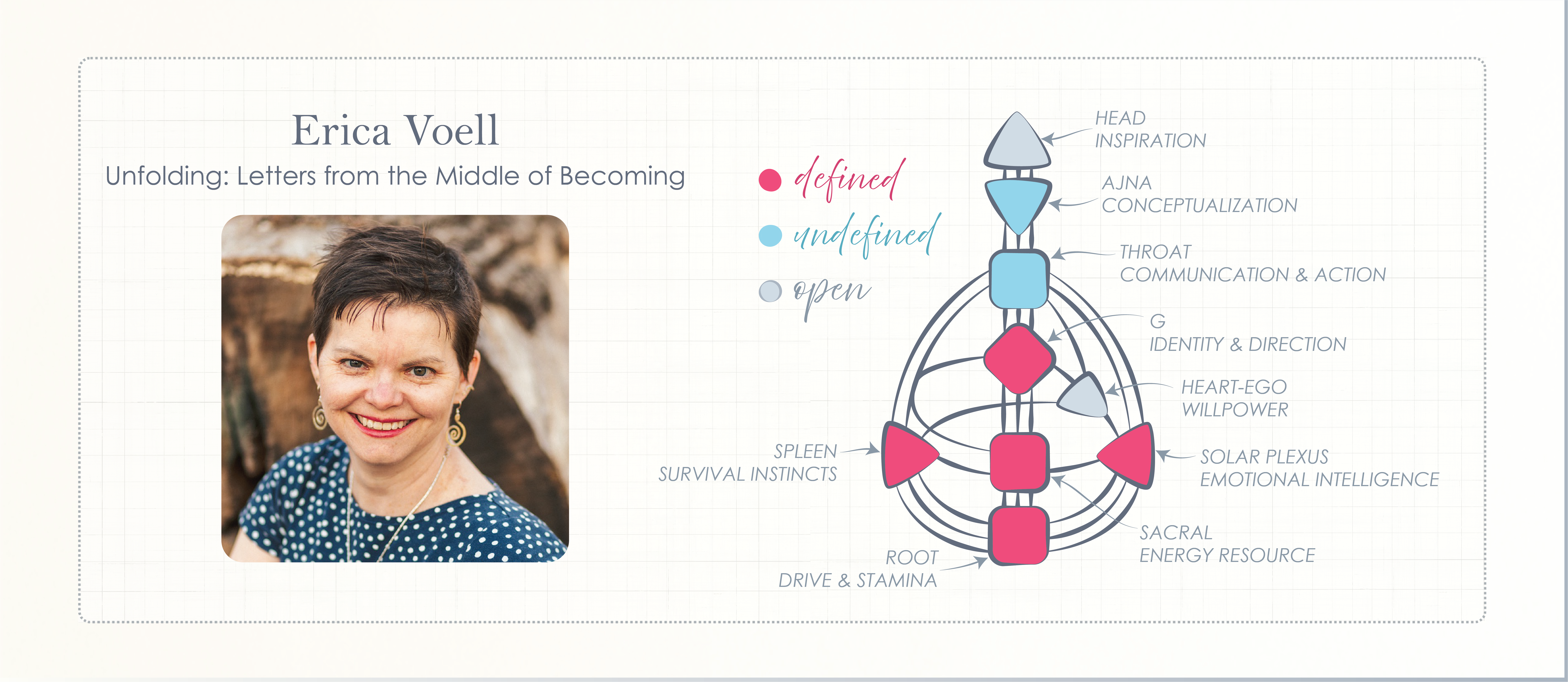
Undefined Throat - Communication & Action Center
by Erica Voell - 5/1 Generator - Single Definition
Substack Publication: Unfolding: Letters from the Middle of Becoming
I grew up in a family of talkers. Family gatherings were usually quite loud with everyone talking over each other and multiple conversations happening across the room at once. I wanted to be included in all of them because I didn’t want to fade into the background. I also felt I needed to have something to say.
What I didn’t realize was that I was learning to talk to fill the silences. I was so uncomfortable with quiet that I thought being a good person meant filling the gaps. I now know why.
What I’ve learned is that silencing and over-talking are often the same thing, two different responses to the same message: you don’t have anything important to say.
I have an undefined throat center. When I learned that, it all made so much sense. It explained the pressure I have always felt to be ready with something to say.
I carried an old story that I didn’t have anything important to say for a long time. I always felt someone else could explain it better or was more articulate or had better ideas, much of the time they were men.
A few years ago, I started to experiment. In meetings, I sat back, listened and waited for the pressure to say something to ease. I started to speak only when it felt right instead of saying something for the sake of “having something to contribute.” A coworker noticed that I was quieter in meetings than I had been in the past, and she told me that when I did speak, what I had to say was more powerful than before. That’s when I feel I really started to understand my undefined throat.
About two years ago I started learning about my communication center in Human Design. I have gate 35, which is about new adventures and sharing my new discoveries with others. My throat center wasn’t a weakness, it carried a gift.
I actually started my podcast to help me find my voice as a coach. For me it was a bit different than most. I knew I had something to say but I didn’t trust it. Having my podcast has definitely helped me understand my voice and deepened my understanding of how my one gate in my communication center truly works.
This past February, I found that old story that I didn’t have anything important to say resurface, but this time I really challenged myself to find its roots. It led me to write a series of articles about midlife women and trusting their voices. It grew into something much deeper than I expected, and as I interviewed other women, I learned my story was not unique.
I also started to find the part of me that wanted to be a journalist when I was 18. And as I’ve begun to share other women’s stories through Substack articles and Substack Lives, I am feeling such a full-circle moment. I had a whisper about four years ago to “gather the women” and I had no idea what it meant. Now I do.
What’s flavoring your Substack these days?
This past April, I explored midlife women’s relationships with their voices over two articles and substack conversations. Fifteen women shared their stories of how they were silenced, talked over, or ran a checklist before speaking, and how that relationship has shifted.
What’s hot in your world right now?
I'm in the middle of the Summer of Self-Love, a Substack series exploring midlife women's relationships with ourselves, self-criticism, and learning to love yourself through Human Design. I'm sharing it through 11 women's stories, with workshops for paid subscribers.
How do you allow your voice to flow freely?
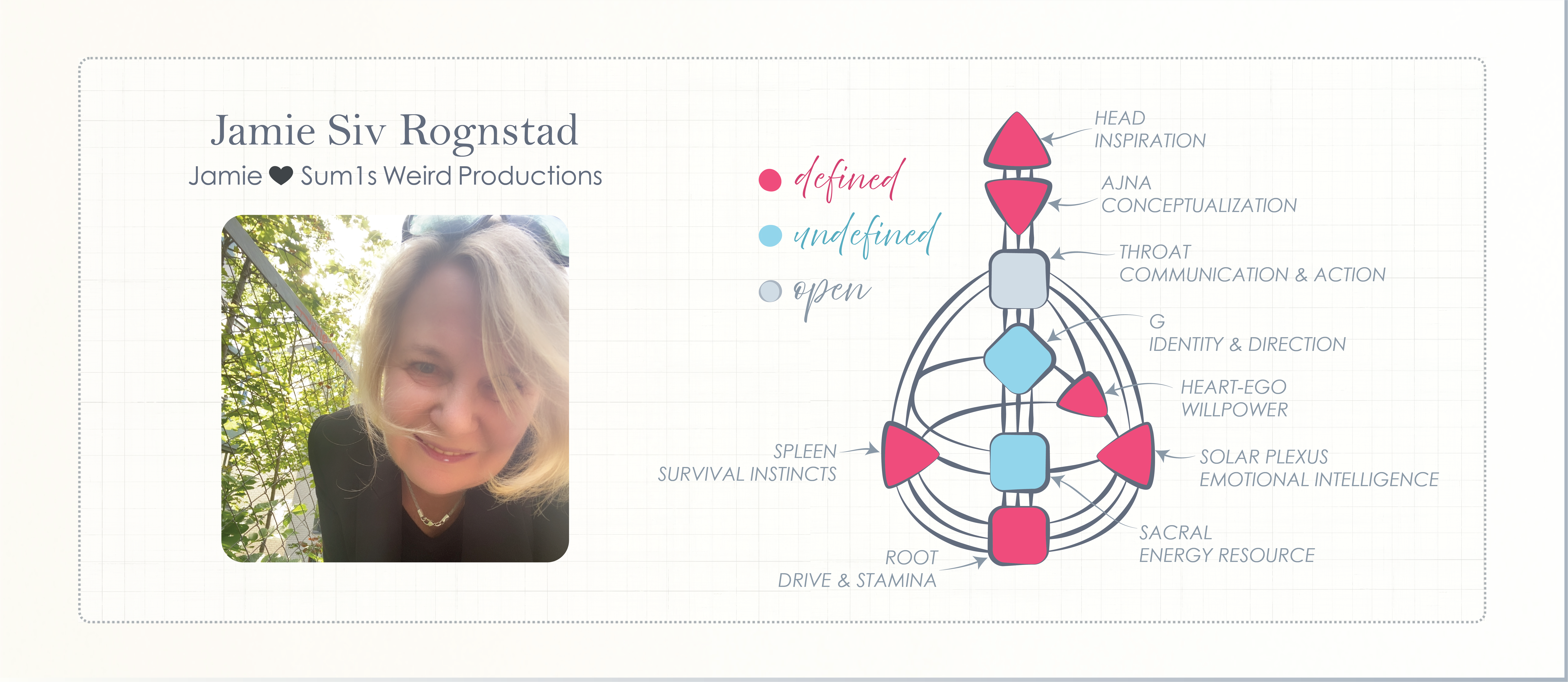
Open Throat - Communication & Action Center
by Jamie Siv Rognstad - 2/4 Projector - Triple Split Definition
Substack Publication: Jamie🖤Sum1s Weird Productions
“Is there a point here?”
My mom’s voice was sharp, her eyebrows lifted.
I stopped. I was doing it again. Going on with all the details, and my mom was waiting for the punchline, or at least some sort of essence she couldn’t grasp. I didn’t even think I could tell a good joke. When someone asks me if I can tell a joke or a story, I go blank. I, who usually have a million stories at hand.
If I speak spontaneously, though, or if we are having a conversation, I can be inspired by a word, a story from you, or a question - and the stories pile up and flow out of me. Now, another challenge occurs: I have to hold myself back.
We’re taught not to hold ourselves back, but I can assure you, it isn’t charming when a person has a new story for every other sentence, and one-ups everyone. In pure excitement, but still. Not charming!
My whole life has been about communication.
ALL my education, more than 30 years in Corp, and the last 16 years in my own business. Everything boils down to communication and voice for me. It’s my mantra.
Are you stuck? It’s a Communication problem.
Don’t know what to say? It’s a Communication problem.
There’s one question I get asked more than any other.
“What would you say in this situation?”
Or: “She keeps talking to me like this, and I have absolutely no idea how to respond.”
Or: “I am so stuck in this situation, and I don’t know how to get out of it”.
And I always have an answer. Immediately. Naturally. For most of my life, I thought everyone was like this. It took years, and eventually Human Design, to understand what was actually going on: I have a completely open Communication Center.
An open Communication Center is pure receptivity. You take in everything. Every communication style, every energetic quality. You don’t have a fixed way of expressing yourself, and you never will. What you have instead is something rarer: a lifetime of deep, unfiltered absorption of how human beings communicate. You’ve been studying this, unconsciously and constantly, since the moment you arrived.
What’s flavoring your Substack these days?
Weirdness! It’s what makes us stand out in the crowd. It’s what drives our voice and message. It’s what we benefit highly from turning the sound up for. I work mainly with Human Design and Archetypes, healing the shadows and utilizing the strengths. New Era Leadership, AI and Business from within!
What’s hot in your world right now?
Right now, I am very excited about my new program “Vanilla to Valued, Your RoadMap to Saying it as it is!” It’s being published for paid subscribers soon, alongside my program on healing your Archetypes and Human Design. We’ll be diving into the Throat Center, first and foremost, but we’ll also look at your other activated gates and how your special Archetypes come into play.
Where Human Design meets real life
There is no shortage of Human Design content. What's been missing is the lived version. This series brings together ten women, each sharing their real experience of a defined, undefined, or open center. The kind of story where you see your own reflection through someone else's life, notice what matches, what doesn't, and learn from both. This is what it looks like in daily life.

The Real Life of the HD Centers
A co-authored Human Design series with 10 voices & 9 Human Design Centers
What's your Throat story?
Restack with a note about yours, or share in the comments.
Meet the voices for this series

Stef Carlstedt
Polly Rusyn 🪩 Emotional Wealth
Michele Marie Neyers 🌸
Kelly Quiney
Leanne Chesser
Jo Ellicott-Barr
Charlotte Webb
Erica Voell
Jamie🖤Sum1s Weird Productions
Tricia Edwards ✧ Devoted Life
 | A guest post by
|
 | A guest post by
|
 | A guest post by
|